
Will a Prep School Nursery guarantee 4+ success?
Selecting a nursery with the hope that it will support a child’s 4+ preparation has become an increasingly common strategy among parents navigating the competitive London prep school landscape. While the right nursery can offer structure, familiarity, and early skill‑building, it is equally important to recognise that no nursery — not even one attached to a prestigious prep school — can guarantee success. Understanding the advantages and limitations helps parents make decisions grounded in reality rather than reputation.
One of the most significant advantages of choosing an independent nursery known for 4+ preparation is the sense of alignment. These nurseries often understand the expectations of local prep schools and can introduce children to the kinds of activities they may encounter: listening games, fine‑motor tasks, early phonics, number sense, and opportunities for turn‑taking and independence. For some children, this gentle familiarity reduces anxiety when assessment day arrives. A well‑structured nursery environment can also help children develop the social and emotional readiness that prep schools value just as highly as academic skills.

Is it as simple as choosing a nursery linked to a prep school?
Another benefit is consistency. Nurseries attached to prep schools often share ethos, routines, and behavioural expectations with their Reception classes. This can make the transition smoother for children who ultimately secure a place. Parents may also appreciate the convenience of a single educational setting from age three to eleven, along with the sense of community that develops over time.
However, these advantages come with important caveats. A nursery’s reputation — even a glowing one — does not guarantee a child’s success at 4+. Prep schools with their own nurseries frequently emphasise that attendance offers no automatic progression. Children are still assessed, and places remain competitive. Parents who assume that joining the nursery secures a Reception place may find themselves disappointed.
Moreover, independent nurseries known for strong 4+ preparation can sometimes create pressure, even unintentionally. When a cohort is collectively focused on assessments, comparison between children can creep in. Some parents may feel compelled to supplement nursery provision with tutoring or structured practice, which can undermine the developmental, play‑based approach that early childhood experts advocate.
Quite often, children in a prep school nursery do move up to the Reception class after passing the 4+ assessment (if is is required for the school). The two main reasons that not everyone in the nursery class move into Reception are:
The parents may be offered a place at a different school after passing their 4+ assessment.
The child may not pass the 4+ assessment for the school (it does happen).
I always say to parents that schools are more likely to go with the children (and families) they know and have worked with, so it definitely does get you a foot in the door - providing you have all made the right impression!
It is also worth noting that not all nurseries with strong reputations are the right fit for every child. A highly structured environment may suit some personalities but overwhelm others. Conversely, a more relaxed, play‑led nursery might not offer the level of routine or exposure that certain children need to feel confident in assessment settings. The “best” nursery is rarely the one with the loudest reputation, but the one that aligns with a child’s temperament and a family’s values.
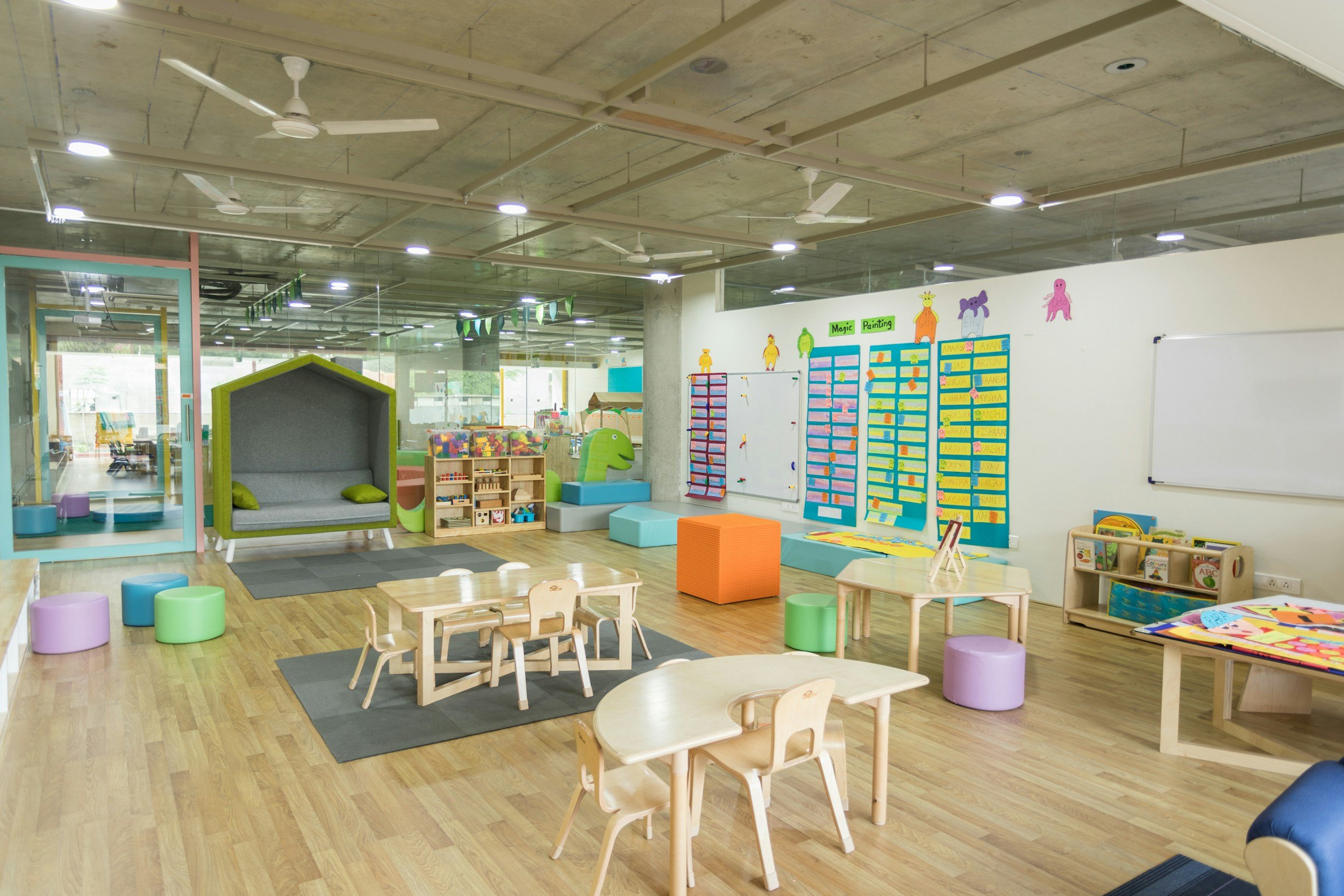
It is not for the nursery alone to prepare your child for the 4+ assessments.
Finally, parents should remember that prep schools assess potential, not polish. They look for curiosity, confidence, communication, and readiness to learn — qualities that can flourish in a wide range of nursery environments. A nurturing, well‑run nursery that prioritises emotional security and joyful exploration can be just as effective in preparing a child for the 4+ as one with a more formalised approach.
In the end, selecting a nursery for 4+ preparation is about balance: understanding the benefits of targeted support while recognising that no single setting can determine a child’s outcome. The right nursery lays foundations - but it is for the parents to fully understand the 4+ assessment process, so they can also help with the preparation. This can be informally at home or by using an experienced 4+ tutor (such as us!) to visit and offer advice and activities to build up the skills and knowledge that is required in these assessments.
